Where Is Work Waiting? Four Flow Metrics That Make It Visible
WIP, cycle time, throughput and work item age: the four flow metrics that show where work waits, what they tell you and how to use them.
Articles / Agile Ways of Working
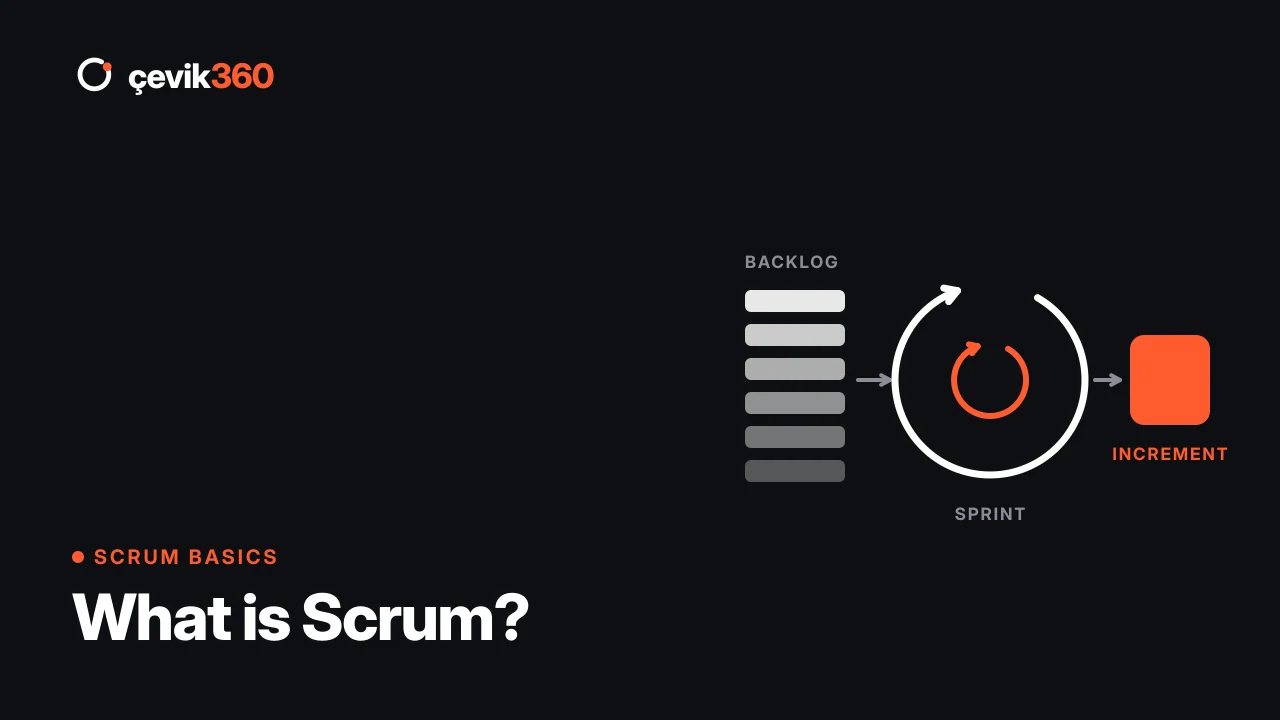
Scrum is a lightweight framework for creating value in short cycles when you work on complex problems. The team produces a usable piece of the product in fixed-length periods (Sprints), reviews the result with stakeholders and decides the next step based on what it learned. This article is based on the 2020 edition of the Scrum Guide, the official definition of Scrum.
Scrum’s real concern is uncertainty. In work where you can’t know up front what will work (a new product, changing customer expectations, technical unknowns), long plans go stale quickly. Instead, Scrum rests on three pillars:
A Scrum Team is a small team, typically no more than 10 people, with all the skills needed to do the work end to end. It has three accountabilities:
Commitment, focus, openness, respect and courage. When these values aren’t lived, the events turn into empty rituals. We explain why they matter in The Five Scrum Values.
Scrum is a strong choice for teams building a new product or feature, where all the skills they need are within the team.
Our experience in the field shows that if most of the work depends on several suppliers or other teams, and capacity isn’t in the team’s hands, fixed Sprint commitments break often. In that case Kanban, which makes work visible and manages flow, often works better. The right question isn’t “which framework is better?” but “where does our work wait?”
Is Scrum a project management method? No. Scrum isn’t a project management methodology but a lightweight framework for product development. It doesn’t define what to build; it defines how to learn and adapt together.
Is Scrum only for software teams? No. It’s used in marketing, HR and operations too, as long as the work involves uncertainty and the team can create value in short cycles.
How long should a Sprint be? One month at most. Most teams choose two weeks; what matters is that the length is fixed and you get feedback often enough.
Not sure whether Scrum or Kanban fits your work? Let’s start with our free 360 assessment, or have a look at our agile transformation services.
WIP, cycle time, throughput and work item age: the four flow metrics that show where work waits, what they tell you and how to use them.
AI speeds up coding, but work still waits for decisions, reviews and tests. What to know before you shorten your sprints.
The eight most common mistakes in agile adoption, from ignoring culture to limiting team autonomy, and how to avoid them.
In a 30-minute call, let's find the bottlenecks in your flow together.