Where Is Work Waiting? Four Flow Metrics That Make It Visible
WIP, cycle time, throughput and work item age: the four flow metrics that show where work waits, what they tell you and how to use them.
Articles / Agile Ways of Working
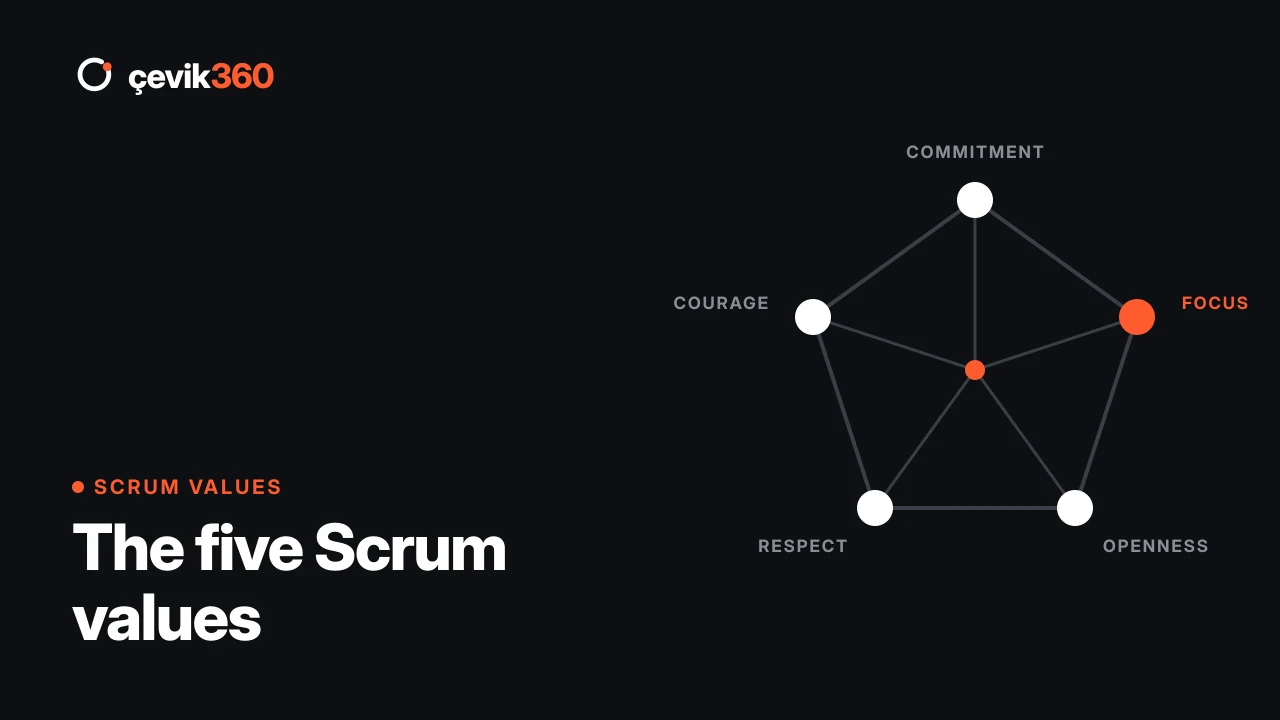
Scrum is usually explained through its roles, events and artifacts. Yet the Scrum Guide says clearly that Scrum’s success depends on how well people live five values: commitment, focus, openness, respect and courage. Without the values, Scrum events become empty rituals. For Scrum’s overall structure, see What is Scrum?
The Scrum Team commits to achieving its goals and to supporting each other. Commitment here doesn’t mean “finish everything in the Sprint, no matter what”; it means dedication to the Sprint Goal, to quality and to your teammates.
When it’s missing: Sprint Goals are often missed, work is left half-done, and “my part is done” becomes the norm.
The team’s primary focus is the work of the Sprint, to make the best possible progress towards its goals. Starting too many things at once is focus’s biggest enemy.
When it’s missing: new work is added constantly mid-Sprint, team members are split across several projects, and work in progress grows while finished work doesn’t.
The Scrum Team and its stakeholders are open about the work and the challenges. Sharing bad news early is always more valuable than sharing good news late.
When it’s missing: risks are hidden until the last minute, the Daily Scrum turns into a status report, and real problems aren’t discussed in retrospectives.
Scrum Team members respect each other as capable, independent people, and are respected as such by the people they work with.
When it’s missing: walls go up between specialisms (“testing is your job”), decisions are made over the team’s head, and certain people dominate meetings.
Scrum Team members have the courage to do the right thing and work on tough problems. Telling stakeholders “we can’t do this in this Sprint” takes courage too.
When it’s missing: the same problems come up in every retrospective but nobody names them, and people quietly say “yes” to unrealistic commitments.
Scrum’s three pillars are transparency, inspection and adaptation. That loop only works when the values are lived:
Related: What is a Sprint?, Sprint Retrospective tips. To run a values workshop with your teams, have a look at our training and coaching.
WIP, cycle time, throughput and work item age: the four flow metrics that show where work waits, what they tell you and how to use them.
AI speeds up coding, but work still waits for decisions, reviews and tests. What to know before you shorten your sprints.
The eight most common mistakes in agile adoption, from ignoring culture to limiting team autonomy, and how to avoid them.
In a 30-minute call, let's find the bottlenecks in your flow together.