The CEO and Sponsor Factor in Agile Transformation
What is the CEO's or sponsor's role in an agile transformation? Vision, removing obstacles, communication and leading by example.
Articles / Agile Leadership
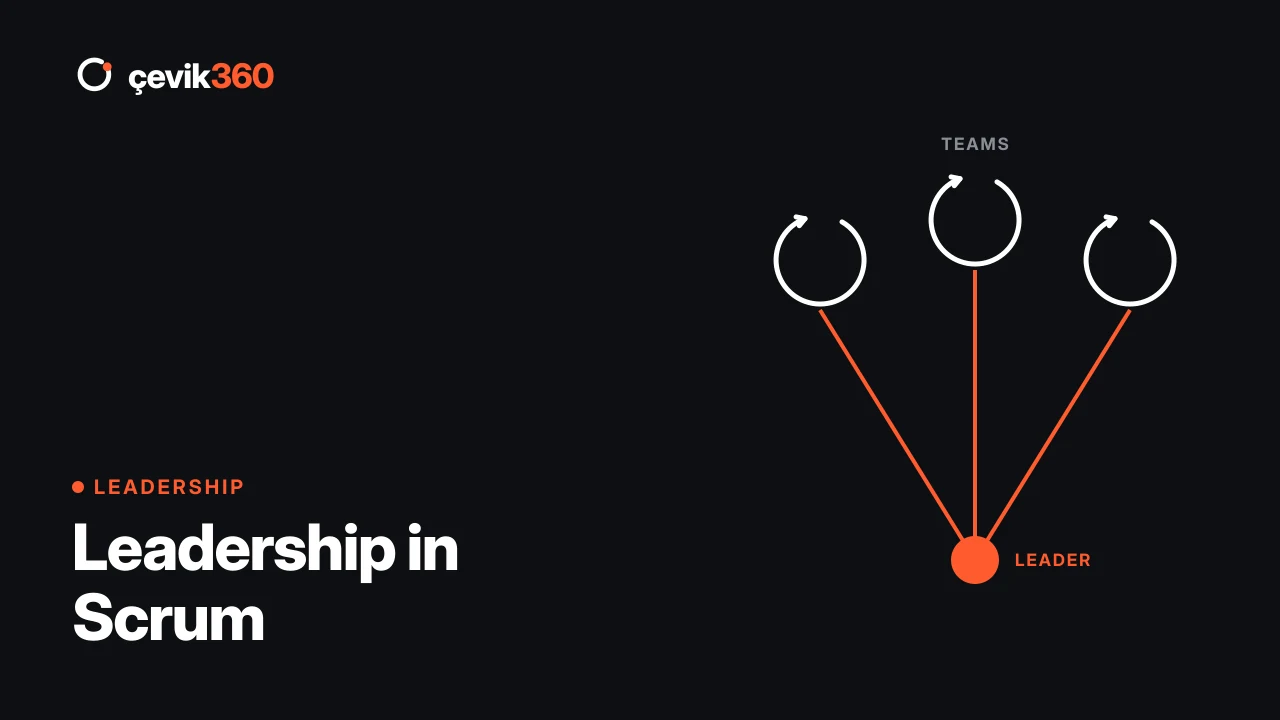
Scrum Teams are self-managing. That sentence is sometimes misunderstood as “Scrum doesn’t need leadership”. Our experience in the field shows the opposite: in most places where Scrum gets stuck, the problem isn’t the team but the leadership behaviour around it.
The Scrum Guide describes the Scrum Master as a true leader who serves the Scrum Team and the organisation. This is leadership that creates the environment, not leadership that gives orders. But leadership doesn’t belong to the Scrum Master alone:
This approach is often called servant leadership: a leader’s success is measured by their team’s success.
Share goals, constraints and the reasons behind decisions openly. When the team knows the “why”, it finds the “how” itself.
Make clear which decisions belong to the team and which to the leader. When delegation stays vague, teams either ask about everything or about nothing.
Own and solve the structural problems the team can’t solve on its own: dependencies, approval processes, missing resources.
Understand the team with flow data, not personal impressions: delivery times, waiting work, how often Sprint Goals are met. You can’t manage what you can’t see.
Create an environment where mistakes and bad news aren’t punished. Scrum’s values of openness and courage only grow in such an environment. See The Five Scrum Values for more.
Run your own work with agile principles too: make your priorities visible, ask for feedback, don’t be afraid to experiment.
Scrum gives teams a working framework, but leaders create the environment that fills it with meaning. A Scrum transformation without a change in leadership behaviour stays, at best, at team level.
To plan an agile leadership workshop with your leadership team, have a look at our training and coaching. Related: The CEO and sponsor factor in agile transformation.
What is the CEO's or sponsor's role in an agile transformation? Vision, removing obstacles, communication and leading by example.
One team can't carry an agile transformation alone. Who should be in the change coalition, how should it work, and which mistakes should it avoid?
What is customer-centric agility? How to put the customer at the centre of work with feedback loops, end-to-end flow, the right measures and leadership.
In a 30-minute call, let's find the bottlenecks in your flow together.