Leadership in Scrum: The Key Factor Behind Failures
Why does Scrum get stuck because of leadership? Servant leadership, what missing leadership does to teams, and six areas leaders should develop.
Articles / Agile Leadership
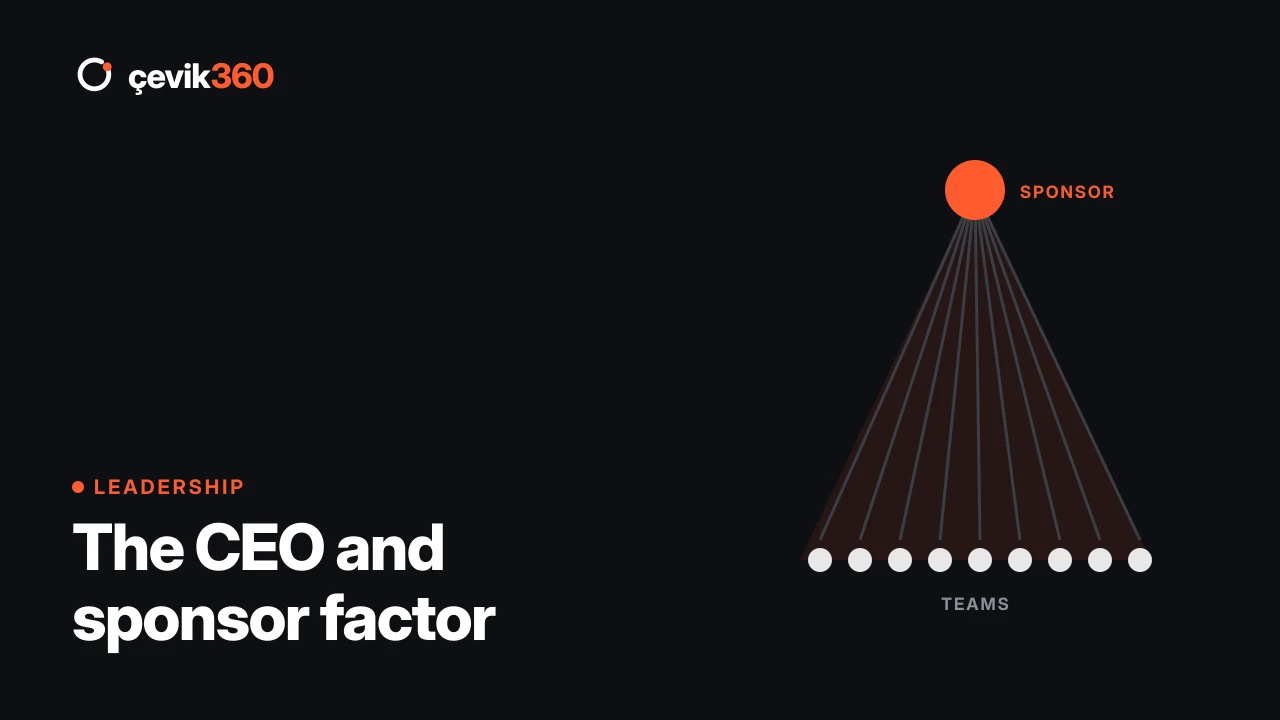
Agile transformations move forward through the effort of teams, but how fast and how deep they go is often decided by one person: the CEO or the transformation’s sponsor. In almost every successful transformation we have seen in the field, there was a visible, active sponsor. In most failed ones, sponsorship amounted to a speech at the kick-off meeting.
An agile transformation changes not only how teams work but also budgets, organisational structure, decision rights and performance systems. None of these can be changed at team level. The sponsor is the person who clears the way where the transformation runs into the rest of the organisation.
They spell out which business problem the transformation will solve: time to market, customer experience, cost or employee engagement. Instead of “becoming agile”, they set a measurable goal.
They point the goals, priorities and incentives of different units in the same direction as the transformation. If one unit is rewarded for speed and another only for cost, conflict between teams is inevitable.
They own the obstacles teams can’t solve on their own: approval processes, budget cycles, role definitions, dependencies. The list of impediments should come onto the sponsor’s agenda regularly.
They share the transformation’s progress, successes and difficulties openly. A sponsor who shares bad news too shows the organisation that openness is safe.
They make their own leadership team’s work visible, prioritise openly and ask for feedback. If the leadership team doesn’t run its own work with agile principles, expecting it from teams isn’t convincing.
They accept that culture change takes time, but they don’t stop tracking progress with data. Delivery times, quality and customer feedback are reviewed regularly.
The CEO or sponsor is both the engine of an agile transformation and its most visible example. Setting a vision is an important start, but what carries a transformation to success is the sponsor’s determination to remove obstacles and change their own behaviour.
Related: Building a coalition for agile transformation, Leadership in Scrum. To build a transformation roadmap with your leadership team, have a look at our agile transformation services.
Why does Scrum get stuck because of leadership? Servant leadership, what missing leadership does to teams, and six areas leaders should develop.
One team can't carry an agile transformation alone. Who should be in the change coalition, how should it work, and which mistakes should it avoid?
What is customer-centric agility? How to put the customer at the centre of work with feedback loops, end-to-end flow, the right measures and leadership.
In a 30-minute call, let's find the bottlenecks in your flow together.