Leadership in Scrum: The Key Factor Behind Failures
Why does Scrum get stuck because of leadership? Servant leadership, what missing leadership does to teams, and six areas leaders should develop.
Articles / Agile Leadership
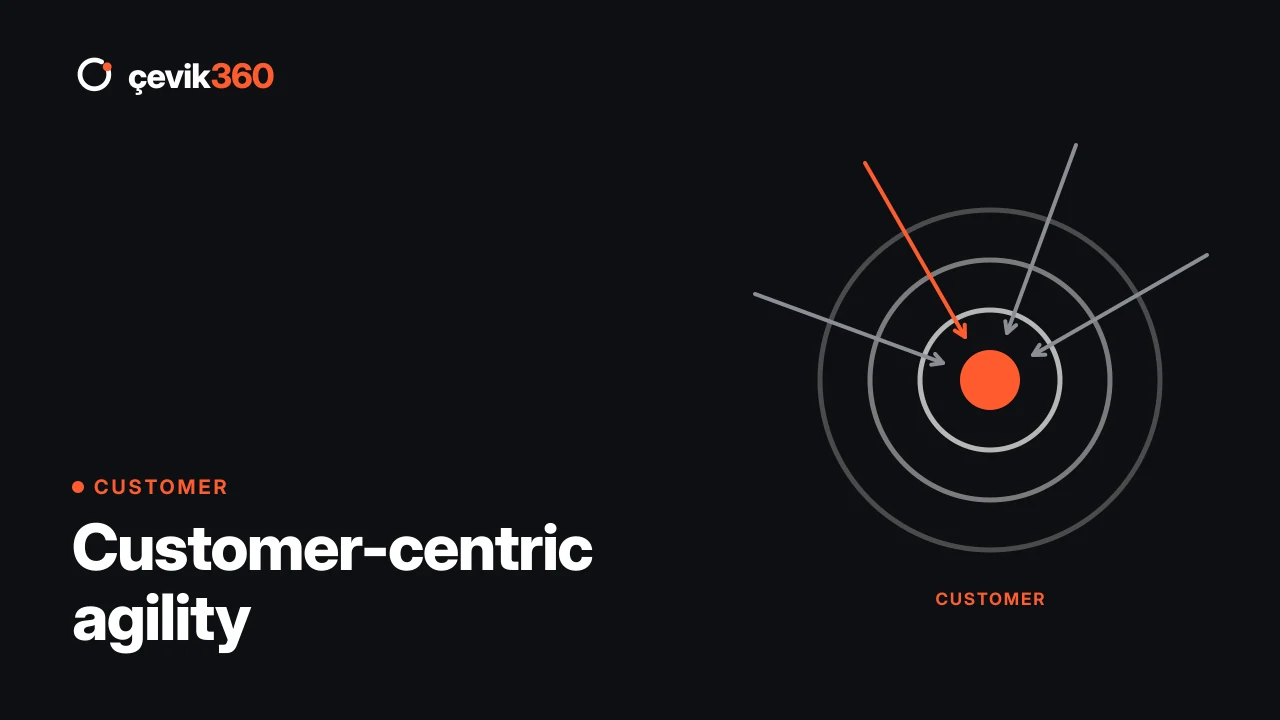
The first principle of the Agile Manifesto says the highest priority is to satisfy the customer through early and continuous delivery of valuable output. Yet in many organisations, agile transformation focuses more on internal processes than on the customer: meetings, roles, tools. Customer-centric agility means turning that focus back to the customer.
In a customer-centric organisation, success is measured by the value that reaches the customer, not by the amount of work done. Three questions are asked constantly:
Don’t wait for the product to be finished to get customer feedback. Deliver in small increments, show early prototypes and review usage data regularly. The Sprint Review should be a working session where customers or their representatives give feedback.
See which units a customer request passes through inside the organisation and how long it waits at each step. What matters to the customer isn’t your internal process, but how long it takes for their request to be met.
Instead of utilisation and the number of completed tasks, track customer-facing measures such as delivery time, customer satisfaction, usage and recurring complaints.
If only sales or product managers know the customer, teams learn about the customer’s problem second-hand. Access to customer interviews, site visits and support tickets helps teams make better decisions.
Approval steps, reports and hand-offs that add no value for the customer lengthen delivery time. Ask lean thinking’s core question: “Does this step create value for the customer?”
The more leaders use customer data and feedback in their decisions, the more customer-centric the organisation becomes. Having customer complaints on the leadership agenda regularly sends a strong message.
Customer-centric agility is a return to the real purpose of agile methods. Meetings and tools are means; the goal is to deliver value to customers faster and more accurately.
Related: Are the Agile Manifesto values still valid?, What is a Product Owner?. To see your flow towards the customer together, have a look at our lean transformation services.
Why does Scrum get stuck because of leadership? Servant leadership, what missing leadership does to teams, and six areas leaders should develop.
What is the CEO's or sponsor's role in an agile transformation? Vision, removing obstacles, communication and leading by example.
One team can't carry an agile transformation alone. Who should be in the change coalition, how should it work, and which mistakes should it avoid?
In a 30-minute call, let's find the bottlenecks in your flow together.