Where Is Work Waiting? Four Flow Metrics That Make It Visible
WIP, cycle time, throughput and work item age: the four flow metrics that show where work waits, what they tell you and how to use them.
Articles / Agile Ways of Working
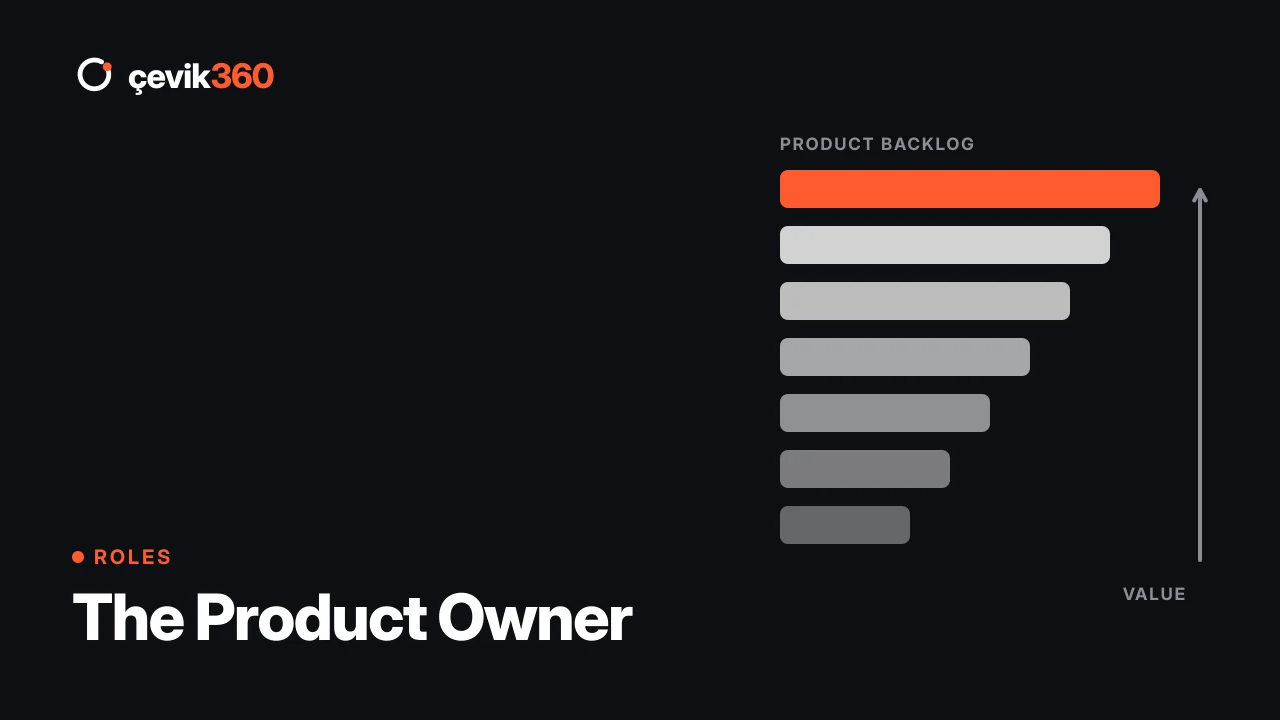
The Product Owner is the person accountable for maximising the value of the product a Scrum Team creates. They decide what gets done, in what order and why, and they are the single owner of the Product Backlog. For the other accountabilities in Scrum, see What is Scrum?
According to the Scrum Guide, the Product Owner is accountable for:
The Product Owner can delegate some of this work, but accountability always stays with them.
The Product Owner is one person, not a committee. When prioritisation turns into negotiation, the team gets pulled in a different direction every day. Stakeholders’ requests are of course heard, but the final ordering decision belongs to the Product Owner. The organisation respecting those decisions is a precondition for the role to work.
Not exactly. In most organisations, Product Manager is a job title and can cover broader topics such as the market, the business model and pricing. Product Owner is an accountability in Scrum. In many companies, the Product Manager also takes on the Product Owner accountability in the Scrum Team.
Can a Product Owner also be a Developer? Scrum allows it, but in practice, when one person carries both, one of them usually suffers.
Can the Product Owner cancel a Sprint? Yes. If the Sprint Goal becomes obsolete, only the Product Owner has the authority to cancel the Sprint.
How detailed should the Product Backlog be? Work coming up soon should be detailed; work further in the future can be rough. The backlog is a living document that is refined continuously.
Struggling to connect strategy to your Product Backlog? Have a look at our strategy, portfolio and product management services and BEXI.
WIP, cycle time, throughput and work item age: the four flow metrics that show where work waits, what they tell you and how to use them.
AI speeds up coding, but work still waits for decisions, reviews and tests. What to know before you shorten your sprints.
The eight most common mistakes in agile adoption, from ignoring culture to limiting team autonomy, and how to avoid them.
In a 30-minute call, let's find the bottlenecks in your flow together.