Where Is Work Waiting? Four Flow Metrics That Make It Visible
WIP, cycle time, throughput and work item age: the four flow metrics that show where work waits, what they tell you and how to use them.
Articles / Agile Ways of Working
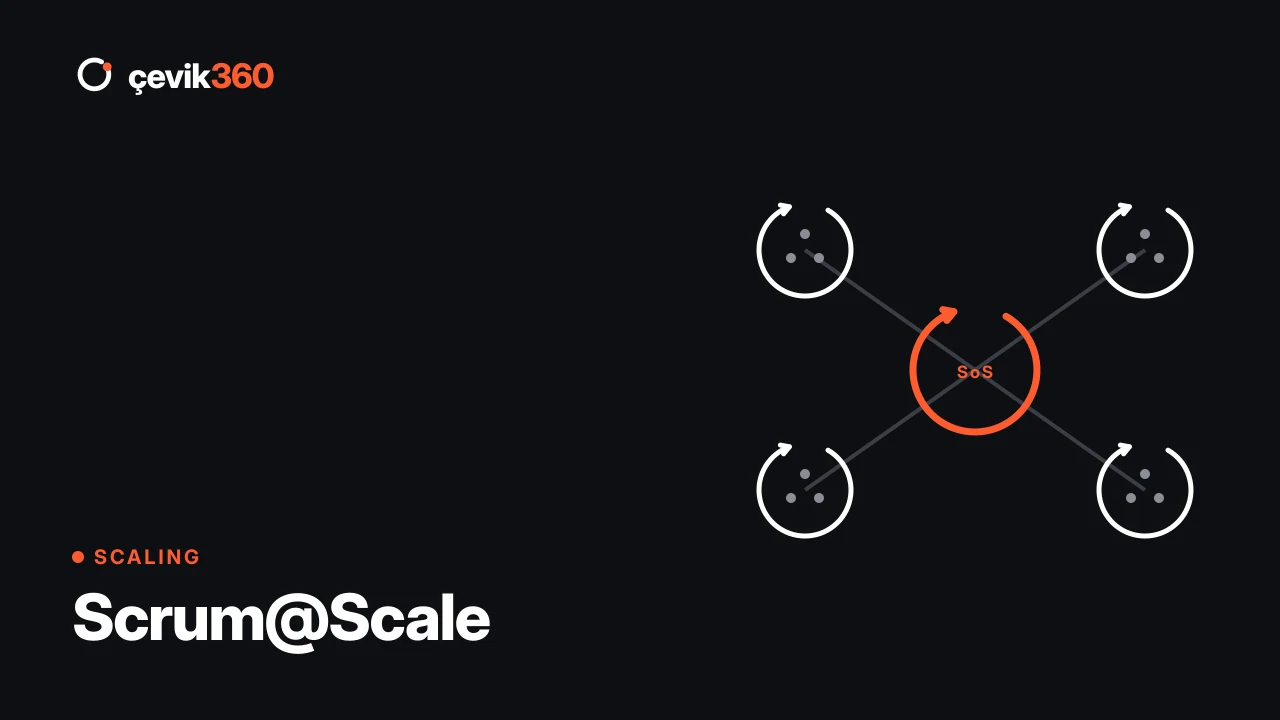
Working with a single Scrum Team is relatively simple. But when dozens of teams start working on the same product or portfolio, new questions appear: how will dependencies between teams be managed? Who sets priorities, and how? Who removes obstacles at organisational level? Scrum@Scale is a scaling framework that answers these questions with Scrum’s own logic.
Scrum@Scale was developed by Jeff Sutherland, one of the co-creators of Scrum, and spread through Scrum Inc. Its core idea is simple: apply the same principles that work in one Scrum Team to teams of teams, and ultimately to the whole organisation.
The framework rests on two important characteristics:
Scrum@Scale takes Scrum’s separation of accountabilities to organisational level:
The two cycles meet in the components of product and release feedback and metrics and transparency.
A team made up of several Scrum Teams that together deliver an integrated output. Team representatives meet regularly to discuss dependencies, impediments and integration, facilitated by a Scrum of Scrums Master. As the organisation grows, several Scrums of Scrums can come together in the same way.
The centre of the Product Owner cycle. Led by a Chief Product Owner, the teams’ Product Owners and stakeholders come together to set priorities on a shared backlog. The MetaScrum at the top of the organisation is called the Executive MetaScrum; it sets the strategic vision and organisation-wide priorities.
The top level of the Scrum Master cycle. It owns the organisation’s agile transformation: it removes impediments the teams can’t solve on their own, changes policies and processes, and is accountable for the quality of the transformation.
More important than which framework you choose is understanding where the need to scale really comes from. Often, reducing dependencies first creates more value than adding a scaling framework.
Related: What is Scrum?, What is a Product Owner?. To design your scaled structure together, have a look at our strategy, portfolio and product management services.
WIP, cycle time, throughput and work item age: the four flow metrics that show where work waits, what they tell you and how to use them.
AI speeds up coding, but work still waits for decisions, reviews and tests. What to know before you shorten your sprints.
The eight most common mistakes in agile adoption, from ignoring culture to limiting team autonomy, and how to avoid them.
In a 30-minute call, let's find the bottlenecks in your flow together.