10 Signs Your Organisation Is Ready for Agile Transformation
Is your organisation ready for agile transformation? Ten signs, from leadership support and market pressure to team autonomy and a learning culture.
Articles / Agile Organisation
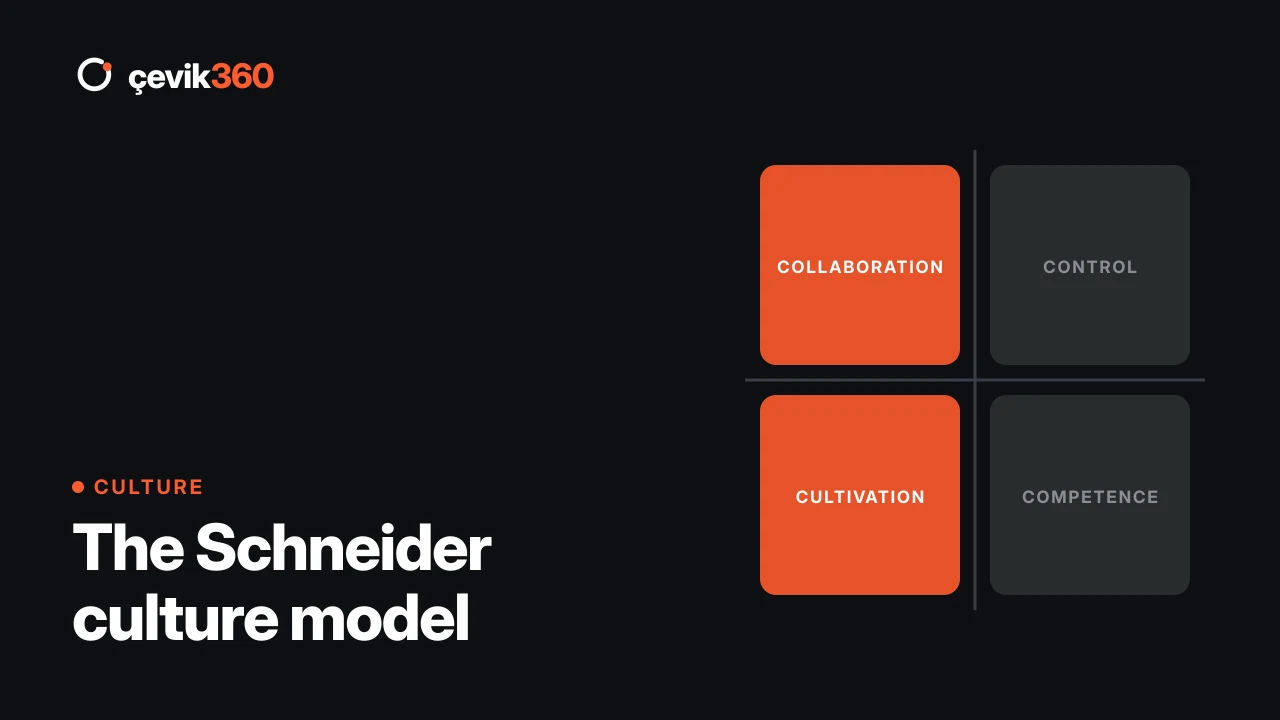
Many agile transformations don’t deliver the expected results even when the methods are applied correctly. The most common reason is a clash between the new way of working and the organisation’s existing culture. William Schneider’s culture model offers a simple but powerful framework for seeing and talking about that mismatch.
In work published in the 1990s, William Schneider looks at organisational cultures along two axes:
These two axes give four core culture types.
Focused on actuality and impersonal. Predictability, systems, order and hierarchy come first. Success means keeping control and reducing risk. Common in highly regulated industries such as aviation and banking.
Focused on actuality and personal. Teamwork, relationships and achieving together come first. Success is measured by how well teams work together and what they achieve together.
Focused on possibility and impersonal. Expertise, excellence and being the best come first. Success is measured by superior knowledge and skill. Common in technology and consulting firms.
Focused on possibility and personal. People growing, realising their potential and a sense of purpose come first. Success is measured by the development of people and the organisation.
According to the interpretation of agile coaches such as Michael Sahota, agile values overlap mostly with the collaboration and cultivation cultures: self-managing teams, individuals and interactions, experimentation and learning. Approaches that emphasise technical excellence, such as software craftsmanship, sit closer to the competence culture.
That’s why trying to apply agile methods as-is in an organisation dominated by a control culture often meets resistance: the idea of a self-managing team clashes with approval processes and hierarchy.
No culture type is “right” on its own; each has its strengths. What matters is knowing where your chosen way of working fits the culture and where it clashes, and designing the transformation accordingly.
Related: Does building an agile culture matter?, Are organisational structures the enemy of agility?. To design your transformation around your culture, request a free assessment.
Is your organisation ready for agile transformation? Ten signs, from leadership support and market pressure to team autonomy and a learning culture.
How is agility applied beyond software? The impact of agile approaches in aviation, e-commerce, healthcare and data science, and the benefits they share.
How do remote and hybrid agile teams succeed? Advice on collaboration tools, time zones, team cohesion and leading remotely.
In a 30-minute call, let's find the bottlenecks in your flow together.