10 Signs Your Organisation Is Ready for Agile Transformation
Is your organisation ready for agile transformation? Ten signs, from leadership support and market pressure to team autonomy and a learning culture.
Articles / Agile Organisation
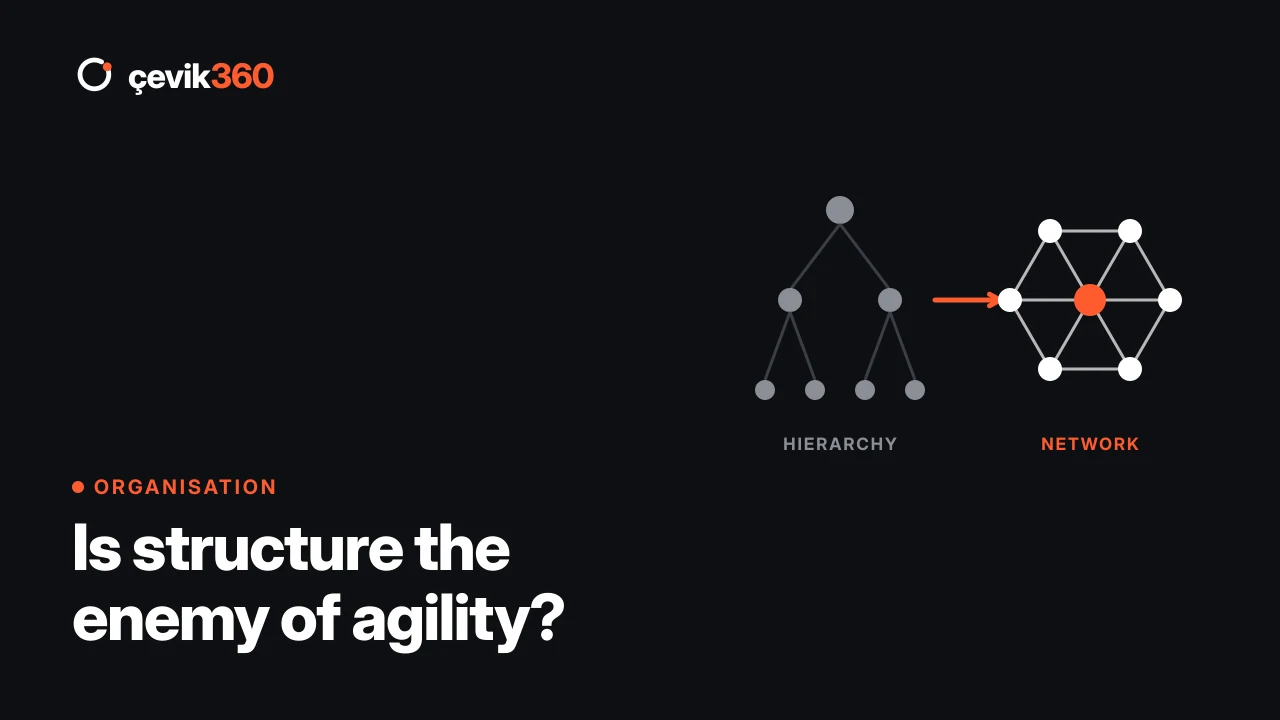
An organisation’s structure largely determines how work flows. However well trained the teams are, if work waits while changing hands between units, if decisions pass through several layers and if everyone looks only at their own unit’s goals, agility stays at team level. In this article we look at how structures block agility and how you can reduce those obstacles.
When work is split by function (analysis, development, testing, operations), every piece of work has to pass through several teams. Every hand-off means waiting and losing information. Most of the delivery time we see in the field is time spent waiting in a queue, not time being worked on.
If it isn’t clear who decides what, decisions are either postponed or escalated to the top. Either way, the work waits.
Every extra management layer lengthens the time it takes to make a decision. Requiring multi-stage approval even for small, reversible decisions stops teams from taking initiative.
If budgets are allocated once a year and by project, new priorities that come up during the year either wait or get done as “hidden work”. Fixed-scope projects make it hard to change direction based on what you learn.
If people are assessed on individual goals, working together as a team and helping with someone else’s work isn’t rewarded. The system encourages local efficiency, not collaboration.
A team depending on other teams, suppliers or central units to finish its work is the most common structural obstacle. If dependencies aren’t visible, delays are always “unexpected”.
Map which units a piece of work passes through from request to delivery and how long it waits at each step. Value stream mapping moves the structure debate from opinions to data. You can’t manage what you can’t see.
Instead of functional teams, form cross-functional teams that own a product or customer journey end to end. If that isn’t fully possible, start by combining the steps with the most frequent hand-offs into the same team.
Write down which decisions belong to the team and which to management. Leave reversible decisions to the team as much as possible.
Make cross-team dependencies visible on a shared board and review them regularly. Reducing dependencies is always more effective than managing them.
Funding long-lived product or value stream teams instead of annual project budgets, and prioritising more often, makes it easier to adapt to changing priorities.
Measure team-level results such as delivery time, value reaching the customer and quality, instead of individual utilisation.
Organisational structures aren’t the enemy of agility in themselves, but when structure and way of working don’t fit, structure always wins. That’s why agile transformation has to go beyond teams and include structure, decision rights and funding.
To see dependencies and value streams from strategy to teams on one screen, have a look at BEXI. To review your structure together, see our strategy, portfolio and product management services.
Is your organisation ready for agile transformation? Ten signs, from leadership support and market pressure to team autonomy and a learning culture.
How is agility applied beyond software? The impact of agile approaches in aviation, e-commerce, healthcare and data science, and the benefits they share.
How do remote and hybrid agile teams succeed? Advice on collaboration tools, time zones, team cohesion and leading remotely.
In a 30-minute call, let's find the bottlenecks in your flow together.