10 Signs Your Organisation Is Ready for Agile Transformation
Is your organisation ready for agile transformation? Ten signs, from leadership support and market pressure to team autonomy and a learning culture.
Articles / Agile Organisation
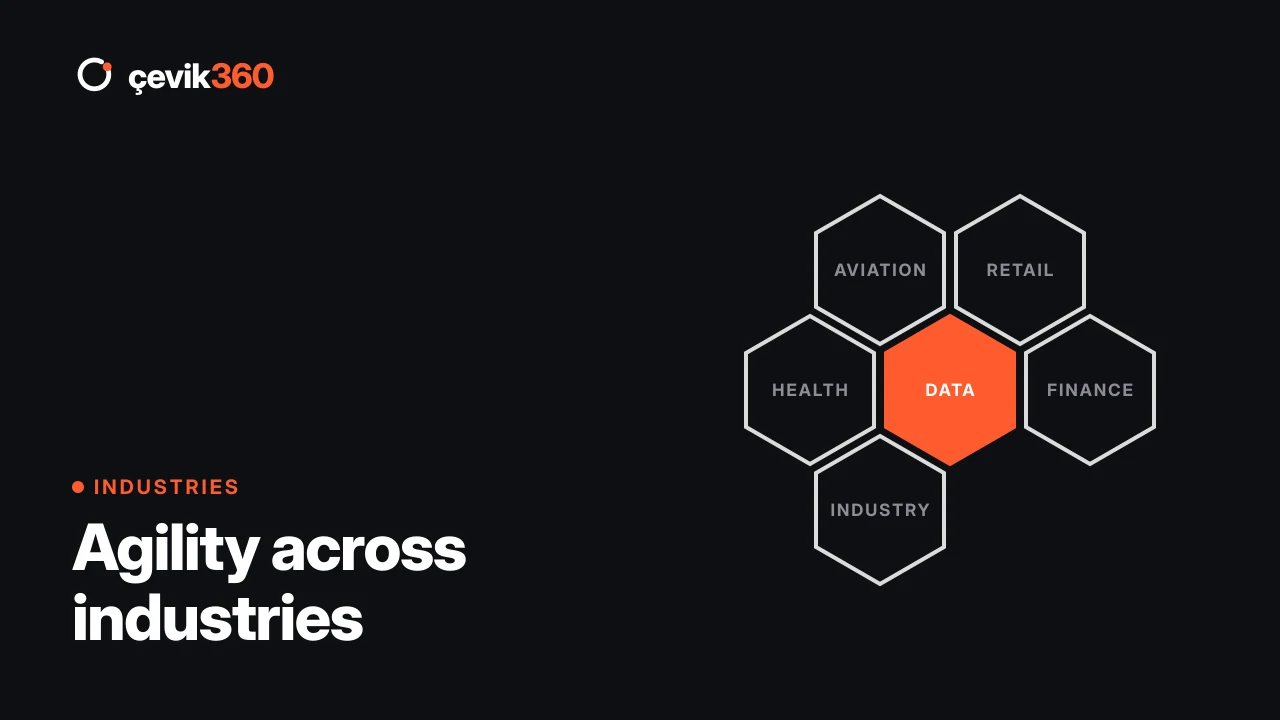
The impact of agile methods isn’t limited to software development. Today they are increasingly adopted in other industries too, such as aviation, e-commerce, healthcare and data science. How agility is applied across these industries shows how organisations adapt to fast-changing demands and embrace continuous improvement.
E-commerce operates in a highly competitive market where consumer expectations keep changing. Agile methods are transforming how work gets done in this dynamic environment. The ability to get to market fast, respond quickly to customer feedback and improve continuously shows why agility matters for e-commerce companies.
In e-commerce, agility provides flexibility during product launches and lets teams adapt quickly to changing demand. Customer feedback is evaluated in line with agile principles, and product improvements are put into practice quickly.
Healthcare is a critical field where there’s no room for error. Yet applying agile methods in this industry can make healthcare services more effective, more accessible and more patient-centred.
Agility offers a flexible approach to planning and delivering healthcare projects. In developing patient management systems or medical devices, for example, agile methods can help teams adapt faster to changing regulations and patient needs.
Data science plays a critical role in many industries today. An agile approach helps data scientists manage analysis projects more effectively. Data science projects are usually full of uncertainty, and agility provides the flexibility to adapt quickly as conditions change.
In data science, agility means fast prototyping and iterative development. With agile principles, data scientists can optimise their analytics processes to produce meaningful results that are closer to what customers expect.
Aviation is one of the industries with the strictest safety and compliance rules. So agility here doesn’t mean “bending the rules”; it means speeding up the flow of work while following them. In areas such as booking and passenger service systems, digital sales channels, enterprise resource planning (ERP) and operations systems, several suppliers and teams work on the same work.
The biggest gains we see in the field come from making work visible and managing dependencies. In our work in aviation, we have seen one team halve its backlog with Kanban and weekly flow reviews, and in another transformation the time to start new projects fell from months to days. See our cases for details.
One shared benefit of agility across industries is being more responsive to customer feedback. Agile methods encourage collecting customer feedback continuously, evaluating it and adapting quickly.
Agility also strengthens communication within teams and creates more effective collaboration between stakeholders. That improves alignment inside the team while adapting to fast-changing demands.
Organisations that adopt agile methods don’t just transform how they work; they also find new and innovative ways to grow market share. E-commerce companies can integrate agile methods into their marketing. An agile e-commerce company can respond to trends quickly with dedicated campaigns; campaigns launched rapidly on social media attract customer interest and create a competitive edge. Agility also lets e-commerce platforms evaluate user feedback immediately and keep improving the shopping experience, which raises customer satisfaction and helps grow market share.
Companies that adopt agile methods in data science can make their marketing data-driven and personalised. A data science company, for example, can analyse customer data quickly and build tailored marketing campaigns. Agility also speeds up data science projects, making it possible to develop new marketing strategies and put them into practice right away.
Companies in healthcare that embrace agility can grow by encouraging innovation in health services. A medical device manufacturer, for example, can adopt rapid prototyping with agile production methods and bring new products to market faster. Agility also helps medical companies move faster on regulatory compliance, so they can bring new products and services to market sooner.
Agility helps organisations in different industries speed up their strategies and put customer-focused innovation into practice. Companies that embrace agility in areas such as e-commerce, healthcare and data science can gain a competitive edge. It shows that agility transforms not only business processes but the world of marketing too.
To talk about an agile or lean transformation approach for your industry, request a free assessment.
Is your organisation ready for agile transformation? Ten signs, from leadership support and market pressure to team autonomy and a learning culture.
How do remote and hybrid agile teams succeed? Advice on collaboration tools, time zones, team cohesion and leading remotely.
Why don't agile transformations deliver? Starting with the method, not measuring, copy-paste models and silos, and how to raise the success rate.
In a 30-minute call, let's find the bottlenecks in your flow together.