10 Signs Your Organisation Is Ready for Agile Transformation
Is your organisation ready for agile transformation? Ten signs, from leadership support and market pressure to team autonomy and a learning culture.
Articles / Agile Organisation
In a world where change keeps accelerating, the most sustainable competitive advantage is being able to learn faster than your competitors. The idea of the learning organisation, popularised by Peter Senge in 1990, describes exactly that: a structure in which people learn continuously, learning is shared, and the organisation changes itself based on what it learns.
Agile methods are a practical expression of that idea. Short cycles, frequent feedback and retrospectives make learning part of daily work.
Senge describes learning organisations through five disciplines:
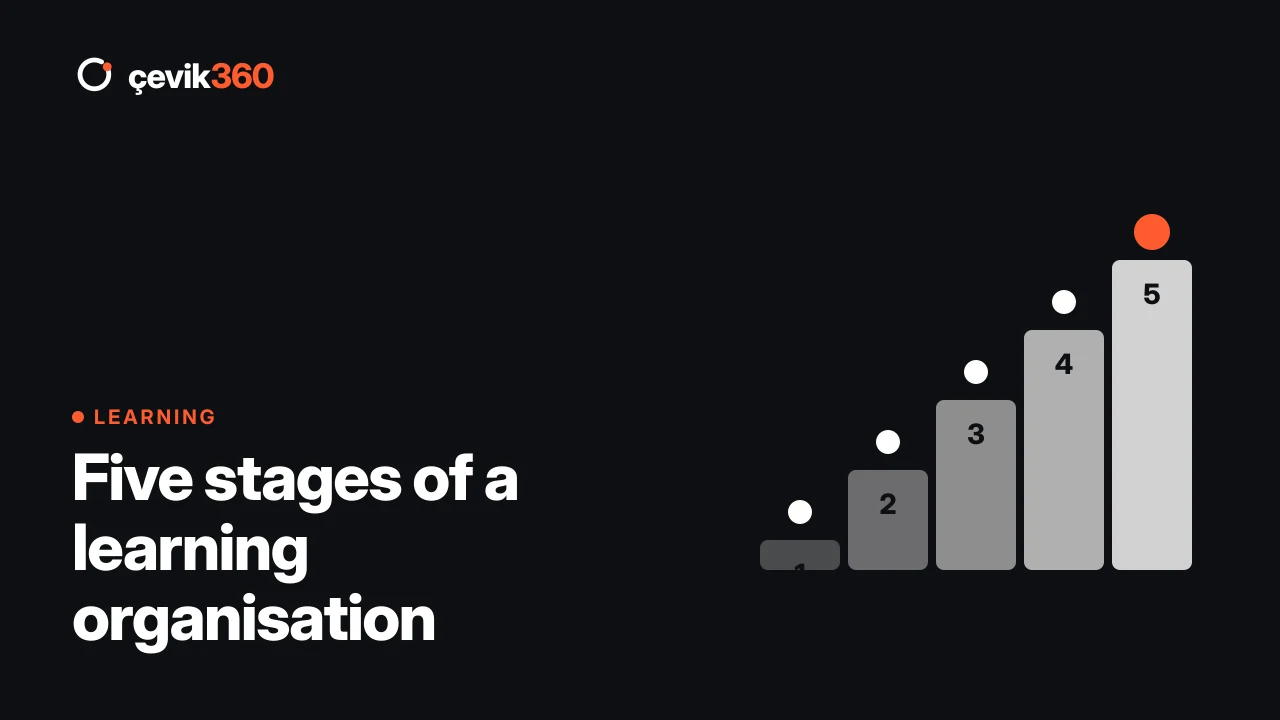
In our experience in the field, organisations usually go through this journey in these stages:
Learning starts with seeing what is happening. If you can’t see where work waits, which work adds value for customers and which decisions lead to which results, there’s no data to learn from. You can’t manage what you can’t see.
Finding out the result of a decision six months later makes learning almost impossible. Short delivery cycles, early customer feedback and regular retrospectives are the loops that set the pace of learning.
Learning organisations run small, reversible experiments instead of big plans. Every experiment has a hypothesis, a measure and a review date. A failed experiment, if well designed, is a successful lesson.
If something one team has learned is learned again and again by other teams, the organisation isn’t learning. Communities of practice, cross-team presentations and shared knowledge bases turn individual learning into organisational learning.
In the final stage, learning stops depending on individuals and becomes part of the system: measurement systems, decision mechanisms, hiring and development processes are designed to support learning. This is Senge’s systems thinking in practice.
Becoming a learning organisation doesn’t happen through a training programme but through a change in how you work every day. Agile methods provide a strong foundation for this change, but the real difference comes when learning is supported by leadership and structure.
Related: Agile methods and continuous improvement, Does building an agile culture matter?. To strengthen your learning loops, have a look at our continuous improvement services.
Is your organisation ready for agile transformation? Ten signs, from leadership support and market pressure to team autonomy and a learning culture.
How is agility applied beyond software? The impact of agile approaches in aviation, e-commerce, healthcare and data science, and the benefits they share.
How do remote and hybrid agile teams succeed? Advice on collaboration tools, time zones, team cohesion and leading remotely.
In a 30-minute call, let's find the bottlenecks in your flow together.