10 Signs Your Organisation Is Ready for Agile Transformation
Is your organisation ready for agile transformation? Ten signs, from leadership support and market pressure to team autonomy and a learning culture.
Articles / Agile Organisation
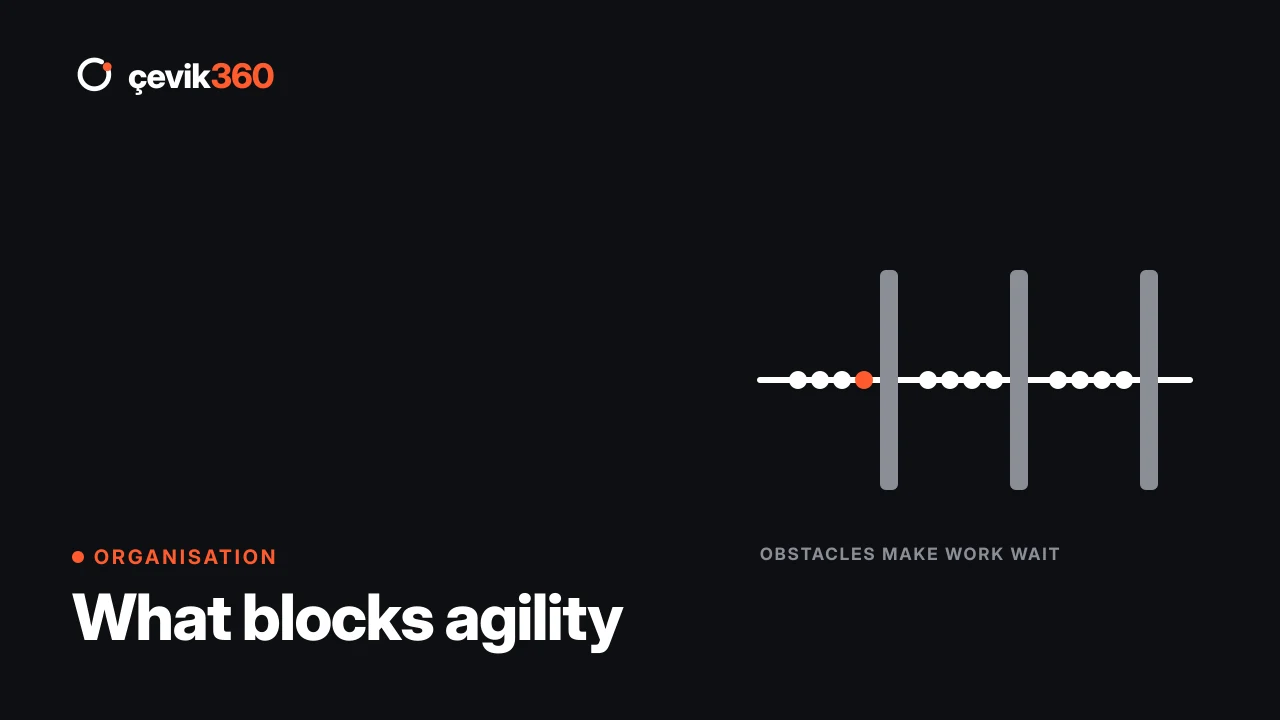
On paper, agile transformation looks simple: teams are formed, training is delivered, new meetings land in the calendar. But a few months later many organisations notice invisible obstacles in the daily work environment slowing the transformation down. In this article we look at the obstacles we meet most often, and how to deal with them.
If management supports the transformation but doesn’t change its own behaviour, employees quickly work out which message is real. For the sponsor’s role, see The CEO and sponsor factor in agile transformation.
“Becoming agile” isn’t a goal. If it isn’t clear which problem the transformation will solve (shorter delivery times, fewer defects, faster decisions), progress can’t be measured either.
Agile transformation isn’t just a new tool or a set of meetings; it’s a change in how work is organised and managed. When that isn’t understood, the old way of working carries on under new names.
If all of a team’s capacity is allocated to current work, there’s no time left to learn and improve. Without room for training, coaching and experimentation, the transformation doesn’t move.
The same person working on several projects at once scatters focus and lengthens delivery times. The more work in progress, the less work gets finished.
Resistance usually comes not from bad intent but from uncertainty and fear of loss: status, expertise, the familiar way of working. Instead of ignoring resistance, you need to understand it.
If decisions pass through several layers and teams are split by function, agility at team level runs into the rest of the organisation. See Are organisational structures the enemy of agility? for more.
Most of the factors that block agility sit in the system, not in the teams. That’s why the solution should be sought less in team training and more in leadership behaviour, goals and structure.
Related: Why agile transformations fail, Common agile mistakes and how to avoid them. To see the obstacles in your organisation together, request a free assessment.
Is your organisation ready for agile transformation? Ten signs, from leadership support and market pressure to team autonomy and a learning culture.
How is agility applied beyond software? The impact of agile approaches in aviation, e-commerce, healthcare and data science, and the benefits they share.
How do remote and hybrid agile teams succeed? Advice on collaboration tools, time zones, team cohesion and leading remotely.
In a 30-minute call, let's find the bottlenecks in your flow together.